In recent years, many of our customers have become aware of modern methods for measuring hole deviation and scanning walls at worksites. We have introduced these technologies several times in our magazine, and if you missed the more detailed coverage, earlier issues of Ruutiset—available on our website—offer a good introduction to the O‑Pitblast software.
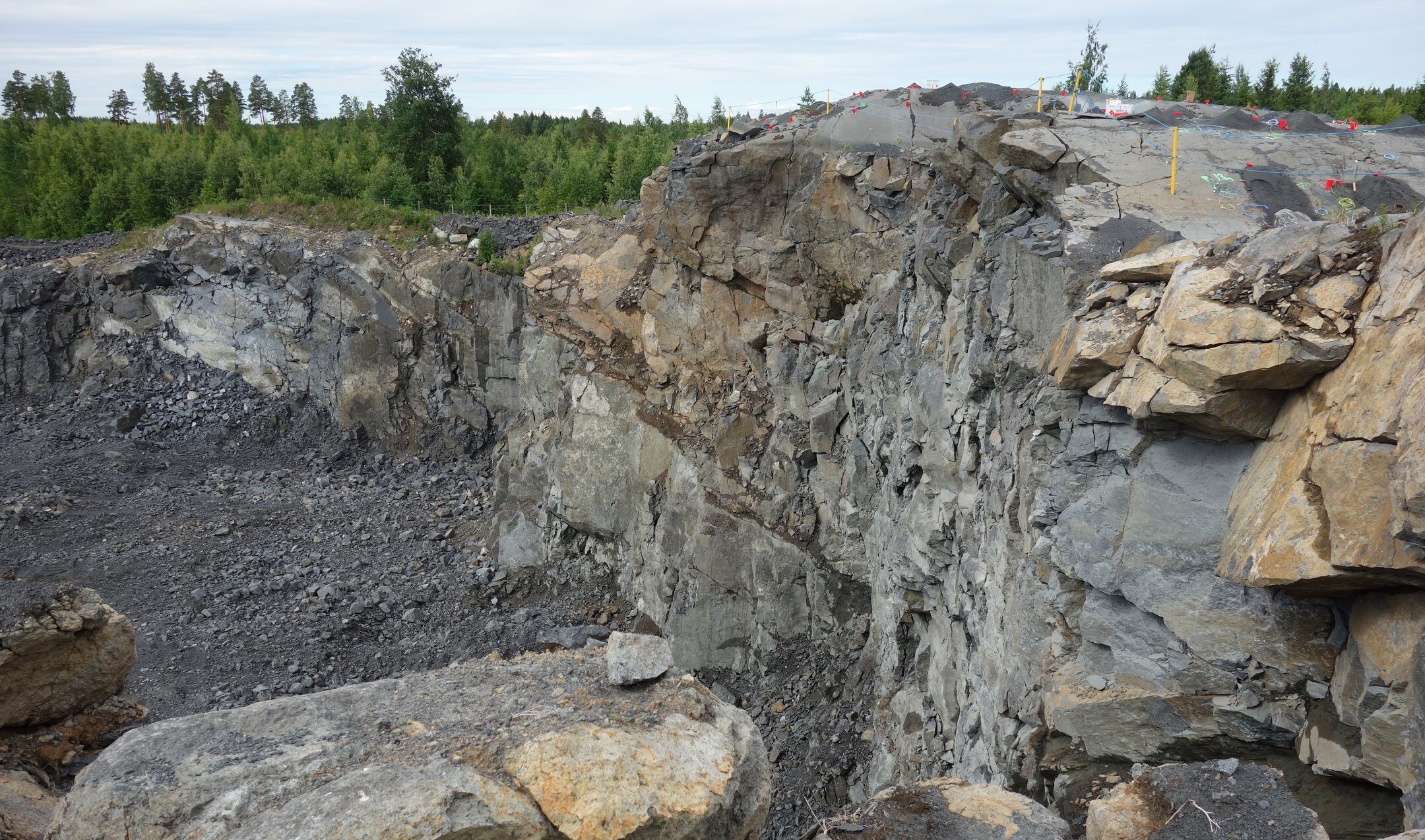
However, many customers have not yet had the opportunity to test our hole deviation measurement and wall scanning services in practice, nor to see the benefits they provide on-site. Wall scanning and deviation measurement are always carried out together. Scanning reveals the condition and profile of the walls, especially the face, turning what would normally be a visual assessment into precise, computer‑generated information in the form of a 3D model.
Even measuring just the front row of drill holes brings a clear safety advantage. Preventing small rock throws can eliminate minor material damage to equipment—such as loaders, transformers, or crushers—especially in tight pits. It also significantly enhances personnel safety by providing reliable information about conditions without requiring anyone to approach the crest.
The data gathered from measured holes offers valuable insight into prevailing conditions and drilling quality. A modern, skilled driller wants to understand how well the drilling has succeeded, and because they know firsthand what happened during drilling and which equipment was used, this data strengthens the overall picture. When drilling data is systematically collected across multiple fields, it becomes possible to form a comprehensive understanding of conditions and performance.
For the blaster, actual drilling data combined with hole deviation measurements provides a solid basis for planning the optimal charging of the field. If holes have deviated more than expected or the bottoms are not where they were intended to be, the charging can be adjusted to minimize risks. A hole may be left uncharged, or the charge can be optimized according to the data. Typical adjustments include repositioning the charge inside the hole or selecting a different explosive type.
Some fundamental causes of hole deviation cannot be influenced (such as rotation), but having the information significantly improves the ability to manage the situation and provides valuable support for planning. As efficiency requirements continue to rise, it becomes all the more important to take every possible step to improve the quality of blasted rock and ensure the best possible end result.
If you would like more information about our borehole measurement and wall‑scanning services, you are welcome to contact us.
Text: Mari Halonen
Image: FORCIT Explosives